Small Garden Design Ideas: Make Your Small Garden Feel Bigger
- Jan 8
- 6 min read
Updated: Jan 24

A small garden is not a limitation. It is a chance to design something precise, considered, and genuinely useful. In tenements, townhouses, and new builds with modest plots, compact spaces demand decisions that larger gardens forgive. Every element you include will be visible. Every detail shows.
This is not necessarily a disadvantage. Small gardens reward careful thought. When space is limited, you make deliberate choices about what matters most. The result, when done well, is a garden that feels considered rather than cramped.
What follows is practical guidance for designing small gardens. The ideas here address the realities of compact urban plots: limited light, overlooked boundaries, the need for low maintenance, and making one space serve multiple purposes.
Assess your space before you start
Before selecting materials or drawing plans, spend time understanding what you have.

Light and shade patterns shift through the day and across seasons. A north-facing garden receives less direct sun than one facing south. Buildings, boundary walls, and mature trees all cast shadows. Track where sunlight falls over a week or two if you can. This determines where seating feels comfortable and which plants will thrive.
Privacy matters in urban gardens. Neighbours in adjacent properties often have clear sightlines from upper windows. Stand in different parts of your garden and look up. Note which windows overlook which areas before committing to a layout.
Urban soil presents challenges. Years of construction and compaction often leave soil in poor condition. Test drainage by digging a hole about 30cm deep, filling it with water, and timing how quickly it empties. Slow drainage indicates waterlogging; fast drainage means dry conditions. Either extreme affects what grows successfully.
Note anything worth keeping. A mature tree, a sound boundary wall, existing paving in good condition: working with these saves money and preserves established character.
Design tricks that expand perceived space
Small gardens benefit from visual techniques that make boundaries feel further away.
Diagonal lines are particularly effective. Laying paving at 45 degrees to your boundary walls draws the eye along the longest dimension of the plot. A rectangular space that feels narrow when paved parallel to its walls feels wider when the same slabs run diagonally.

Colour affects depth perception. Cooler tones, particularly blues, greens, and silvers, make surfaces feel further away. A boundary wall painted in soft blue-grey recedes visually. Reserve bright, warm colours for foreground elements where they create focal points rather than barriers.
Simplicity prevents clutter. Resist the temptation to include too many different materials, plant species, or features. Choose two or three materials and repeat them. A restrained palette creates calm and makes spaces feel larger.
Large-format paving reduces visual interruption. Every joint line creates distraction. Slabs of 600x900mm or 900x900mm suit small gardens better than smaller pavers that create busy patterns. The Royal Horticultural Society notes that successful small garden design relies on simplifying rather than complicating.
Mirrors and reflective elements can double perceived depth when positioned thoughtfully. A mirror on a boundary wall, angled to reflect greenery rather than buildings, creates an illusion of space beyond the actual boundary.
Making one space work harder
Large gardens accommodate distinct zones. Small gardens cannot. Attempting to replicate this zoning in a compact plot fragments the space and makes everything feel cramped.
The alternative is designing one multi-purpose area that adapts to different uses. A single patio can serve morning coffee, evening entertaining, and weekend relaxation if you plan for flexibility rather than fixed functions.
Built-in benches with storage underneath keep things tidy without needing a separate shed. Cushions disappear inside when not in use. Folding or stackable furniture allows the space to transform between uses rather than committing permanently to one configuration.

Good garden design for small spaces focuses on adaptability. Rather than cramming in fixed features, it creates a framework that supports whatever you need on any given day.
Hard landscaping in compact spaces
Material choices matter more in small gardens than large ones. The wrong paving shrinks perceived space; the right choice expands it.
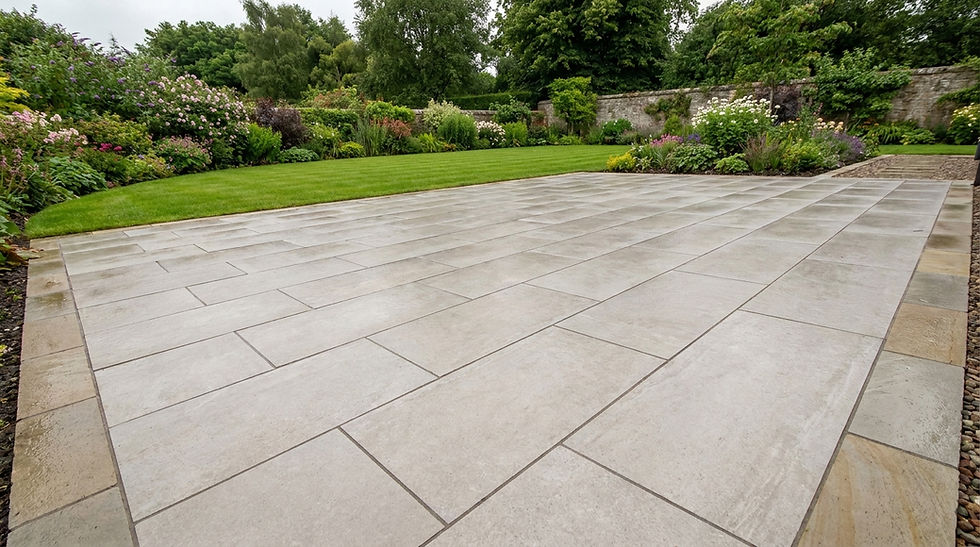
Fewer joints create a more expansive floor. A 3x4 metre patio laid in 900x900mm slabs has far fewer visible lines than the same area covered in 300x300mm pavers. Larger formats read as continuous planes rather than assemblies of small units.
Light colours help in shaded gardens. Pale paving reflects available light back into the space. Grey, cream, and buff tones prevent the gloomy feeling that dark surfaces create in shade.
Porcelain works well in wet, shaded conditions. Natural stone develops moss and algae quickly in damp environments, requiring regular cleaning. Porcelain has a non-porous surface that resists biological growth and cleans easily.
Edge details deserve attention. Heavy borders or contrasting edges create visual frames that emphasise boundaries. Letting paving run to boundaries, or using minimal edge restraints that disappear into planting, avoids this containment effect.
Boundaries and vertical surfaces
In small gardens, walls and fences form a significant proportion of the visual field. They deserve the same design attention as floors and planting.
Slatted screens provide privacy while allowing light and air through. Solid fencing blocks overlooking but darkens the space. Slats filter sightlines without creating a boxed-in feeling.

Climbers add interest without consuming floor space. A wall-trained clematis or climbing hydrangea covers vertical surfaces with greenery while needing only a narrow strip of ground. The Landscape Institute highlights vertical planting as particularly valuable in urban gardens where ground area is at a premium.
Wall-mounted planters push this further. Where floor space is tight, growing upwards makes sense. Metal or timber planters fixed to walls hold trailing plants or seasonal colour without occupying precious ground.
Paint colour affects how boundaries read. Dark colours make walls recede visually. Pale colours bring them forward. The choice depends on what serves your specific space. Professional fencing and timber work addresses both structural and aesthetic
considerations.
Planting for small spaces
Plant selection in small gardens demands restraint. Choose species that stay where you put them and maintain proportion year after year.
Dwarf varieties and compact cultivars have been bred to stay small. Dwarf box, compact pittosporum, and low-growing ornamental grasses suit small plots where full-sized relatives would quickly outgrow their positions.
Evergreen plants provide year-round structure. In larger spaces, deciduous plants contribute even when bare. In small gardens, a few bare twigs look sparse rather than structural. Evergreen shrubs and architectural plants provide permanent form through every season.

Grasses add movement and texture without bulk. Hakonechloa, carex, and smaller miscanthus varieties bring softness while staying in proportion. Most need just one cut annually, in late winter.
Containers allow seasonal colour without permanent commitment. Bulbs in spring, annuals in summer, cyclamen in autumn: containers provide seasonal interest while structural planting holds the permanent composition.
Avoid vigorous spreaders. Bamboo, mint, and fast-spreading groundcovers quickly overwhelm small spaces. The Scottish Rock Garden Club recommends compact plants that tolerate wet winters and suit restricted spaces.
Artificial grass for shaded plots
Real grass struggles in deep shade and high-traffic areas. In north-facing gardens and heavily used family spaces, artificial grass offers a practical alternative.

Modern products look convincing and drain properly when installed correctly. For families with children and pets, artificial grass provides a year-round surface without mud or bare patches.
Installation quality determines success. Artificial grass needs a properly prepared base with adequate drainage. Laid over compacted soil, it develops bumps and puddles. Professionally installed with proper edging and drainage, it provides years of trouble-free service.
Lighting and privacy
Lighting transforms small gardens after dark and extends usability through winter evenings.
Uplighting on walls makes boundaries recede. Light washing upward draws the eye up and makes vertical surfaces feel further away. Path lights arranged along paving edges guide the eye through the space and make it feel longer.
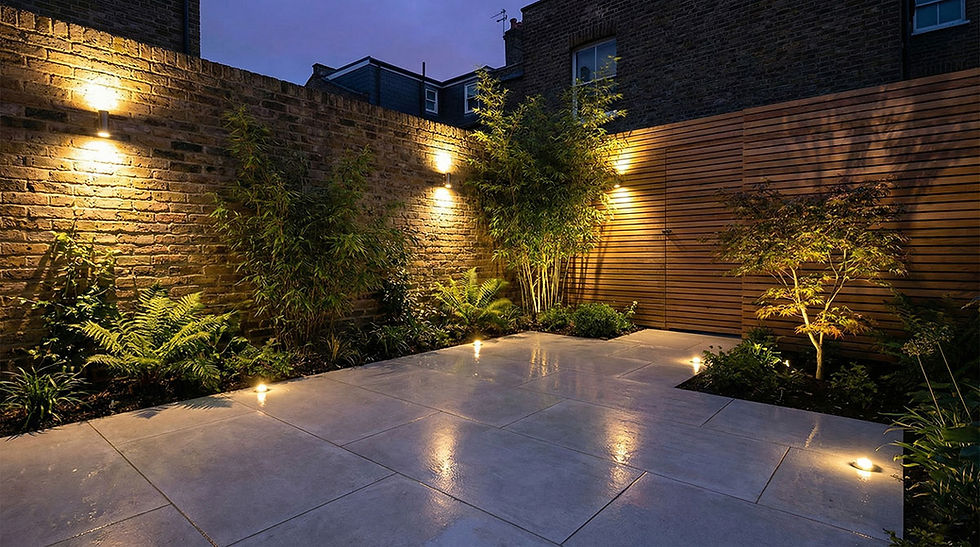
Avoid bright floods that flatten the garden. Multiple lower-level lights with varied intensities create interest and dimension that a single source destroys.
Privacy solutions for overlooked gardens need to work without creating enclosure. Screens positioned strategically block specific sightlines. Tall planting along boundaries creates living screens. Overhead structures like pergolas block views from above while adding architectural interest.
Low-maintenance combinations
Busy homeowners need gardens that look good without demanding weekends of attention.
Porcelain paving cleans with a pressure washer once or twice yearly. Artificial grass eliminates mowing entirely. Evergreen planting needs minimal pruning when you choose slow-growing varieties. Automated irrigation keeps containers healthy during dry spells.
Gravel or slate mulch around planting suppresses weeds. These combinations deliver gardens that look good year-round with genuinely minimal input.
How MacColl & Stokes approach small garden projects
Precision matters more in compact spaces. Every element is visible, every detail shows, and there is nowhere to hide poor workmanship.
Our approach to small garden projects begins with understanding how you want to use the space. We visit, measure, assess conditions, and discuss your priorities before design work starts.
Design follows from this understanding: the right materials for the conditions, planting that stays in proportion, features that serve multiple purposes.
Installation applies the same standards we bring to larger projects. Proper sub-bases prevent sinking. Correct drainage falls avoid puddling. Skilled installers understand that compact spaces demand extra care because every joint and edge is visible.
Speak to our team
If your small garden needs attention, we would welcome the chance to discuss it. Contact us for a free consultation and site visit.
Browse our small projects portfolio to see examples of compact garden transformations.