Front Garden Ideas: Simple Ways to Improve Kerb Appeal
Updated: Jan 24

Your front garden is the first thing visitors see. It sets expectations before anyone reaches the front door. A tired entrance with cracked paving, overgrown shrubs, and weeds pushing through gravel suggests neglect. A well-designed front garden signals care, creates a welcoming approach, and adds value to your property.
Front gardens present particular challenges. They need to accommodate practical demands: parking, bin storage, meter access, delivery drop-offs. They face the street, exposed to passing traffic and the judgement of neighbours. And unlike back gardens, you rarely spend time in them, which means maintenance often slips.
This guide covers practical ideas for improving your front garden. The focus is on creating an entrance that looks good, handles daily use, and does not demand constant attention.
What makes a front garden work
A successful front garden balances visual impact with practical function.
Kerb appeal matters more than aesthetics alone. Estate agents consistently report that front garden condition affects property valuations and sale speed. The Royal Horticultural Society notes that a well-maintained front garden can add measurable value to your property. First impressions form quickly, and buyers make judgements before stepping inside.

Beyond resale value, your front garden affects how you feel coming home. A welcoming entrance lifts your mood at the end of a long day. A neglected one reminds you of tasks undone.
Function must not be sacrificed for appearance. A beautiful front garden that provides nowhere to park, nowhere to store bins, and no clear path to the door fails in its basic purpose. The best designs accommodate practical needs elegantly rather than treating them as problems to hide.
Assess your front garden before you start
Before choosing materials or plants, understand what you have and what you need.
Orientation affects everything. A north-facing front garden receives little direct sunlight, staying damp and shaded for much of the year. Moss grows readily on hard surfaces. Plants must tolerate shade. A south-facing plot offers more options but can overheat against the house wall in summer.
Measure the space accurately. Front gardens often feel smaller than they are, or larger. Knowing actual dimensions prevents expensive mistakes when ordering materials.
Identify parking requirements. Do you need space for one car, two, or none? Parking often dominates front garden design; understanding your needs determines how much space remains for other purposes.
Consider bin storage. Councils provide multiple bins now. These need somewhere to live between collections, ideally out of sight but accessible for collection day.
Assess drainage. Where does rainwater go? Does it pool anywhere? Does it drain towards the house? Understanding existing drainage informs decisions about surfaces and levels.
Front garden styles for different properties
Matching your garden to your house creates visual coherence.
Victorian and Edwardian terraces typically have small front gardens with a path from gate to door. Original features often included geometric tile paths, cast iron railings on low walls, and formal planting. Restoration of original elements or sympathetic recreation suits these properties. Evergreen structure like box balls or clipped hedging complements the architecture better than cottage garden informality.

Georgian townhouses demand restraint and symmetry. Stone predominates. Hedging, where present, is clipped into formal shapes. The elegance lies in proportion and quality of materials rather than abundance.
Suburban villas from the inter-war and post-war periods offer more space. The challenge is preventing the driveway from dominating entirely. Balancing hard surfacing with planting maintains residential character.
Modern and new build homes present a blank canvas. Contemporary materials suit clean lines. Alternatively, new builds can be softened with more traditional approaches if the architecture permits.
Professional garden design that respects architectural character creates the most successful results.
Hard landscaping options
The surfaces you choose define your front garden's character and maintenance requirements.
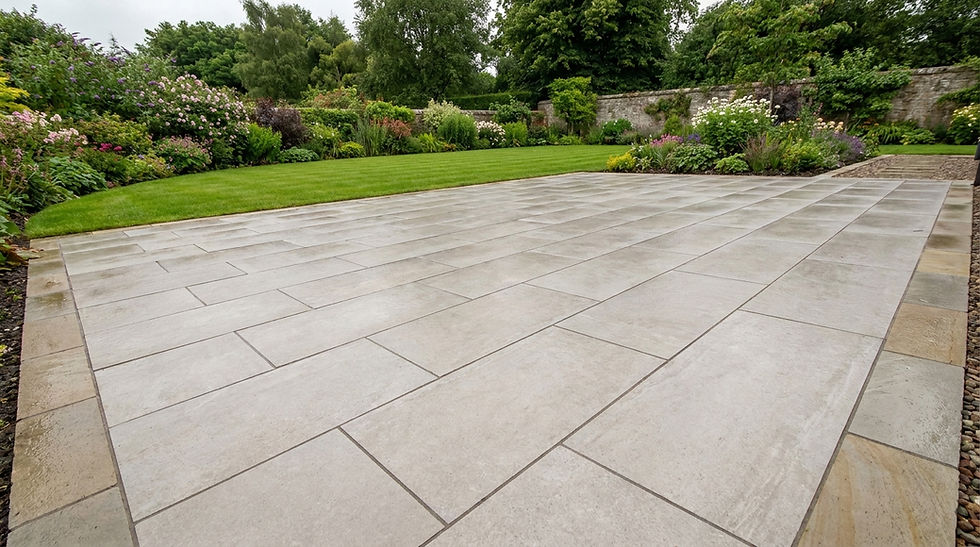
Porcelain paving resists staining, handles frost without damage, and does not support moss or algae as readily as natural stone. In shaded front gardens, porcelain stays cleaner with less frequent washing. Cost sits higher than concrete but below premium natural stone.
Natural stone offers unmatched character. However, porous varieties absorb water and support biological growth in damp positions. For prominent front gardens where appearance matters most, the maintenance trade-off may be worthwhile.
Block paving remains common for driveways and front gardens. Quality varies significantly; cheaper products fade and suffer frost damage. Better quality clay pavers maintain colour for decades.
Resin-bound surfacing creates a smooth, permeable finish. It drains freely, reducing puddles and meeting planning requirements. The appearance suits modern properties particularly well.
Gravel offers the lowest cost and instant permeability. Loose gravel migrates and requires periodic topping up. Stabilised gravel systems address this by locking stones in place.
Professional paving installation ensures proper sub-base preparation and durable edge restraints.
Balancing parking with planting
Many front gardens must accommodate vehicles without becoming entirely paved.
Planning permission applies to front garden paving. If you pave more than five square metres with impermeable surfacing, you need permission unless water drains onto a permeable area within your property. Government guidance requires permeable surfaces or drainage to planted areas for larger installations.

Permeable options satisfy these requirements while providing practical parking. Permeable block paving, resin-bound surfaces, and gravel all allow water through.
Wheel tracks with planting between offer a visual compromise. Two paved strips for wheels, with gravel or low planting in the central zone, reduce hard surfacing while providing functional parking.
Planting beds along boundaries preserve green space while allowing a central driveway. Even narrow beds support hedging or structural shrubs that soften the dominance of paving.
Boundary treatments
The boundary between your front garden and the street defines your property visually and physically.
Hedging provides living boundaries that soften edges. Evergreen options like yew, box, and privet maintain screening year-round. Hedges need regular trimming; in front gardens they typically stay below 1.2 metres to maintain sightlines.
Low walls suit period properties. Rebuilding or restoring original walls maintains architectural character. New walls should match the house in material and style.

Railings complement Victorian and Edwardian properties. Original railings were often removed during wartime; reproduction designs can restore period character.
Close-board fencing risks appearing defensive. Where screening is necessary, slatted panels look less forbidding than solid fence panels.
Professional walling and steps and fencing ensures boundaries suit your property type.
Planting for front gardens
Front garden planting must look good year-round while tolerating pollution, limited root space, and occasional damage from passing feet.
Evergreen structure provides the foundation. Box, yew, pittosporum, and sarcococca hold their leaves through winter and respond well to shaping. These structural plants create the permanent framework.
Shade tolerance matters for north-facing plots. Ferns, hostas, hellebores, and hydrangeas perform well in shade. Climbing hydrangea covers north-facing walls that other climbers refuse.
Low maintenance should guide selection. Front gardens receive less attention than back gardens. Plants needing staking, deadheading, or frequent pruning demand effort that often goes undelivered. Self-sufficient species suit front garden conditions better.

Seasonal colour comes from bulbs and containers. Spring bulbs naturalised in gravel provide early interest. Summer containers by the front door can be planted or bought ready-made.
Professional planting selects species appropriate to your conditions and maintenance appetite.
Paths, lighting, and bins
The path from gate to front door deserves attention. A direct path suits formal properties. Material choice can match the driveway for continuity or contrast for definition. Steps accommodate level changes; proper construction prevents them shifting over time.
Lighting transforms paths after dark. Low-level fittings illuminate the route without glare. Practical illumination at steps ensures safety. Timer or sensor control means lights operate when needed.

Bin stores provide dedicated housing that hides eyesores. Position stores where bins can reach the collection point easily. Planting can screen bins without requiring built structures; evergreen shrubs blocking sightlines from the street work well where space permits.
Drainage and weather
Permeable surfaces allow rainwater to soak through into the ground beneath. This reduces burden on storm drains and meets planning requirements.
Hard surfaces need falls directing water away from buildings. Water collecting against walls causes damp problems. Proper levels established during construction prevent problems that prove expensive to fix later.
Moss and algae thrive on surfaces that stay damp. Shaded front gardens dry slowly and support biological growth that needs periodic cleaning. Porcelain resists growth better than sandstone; resin-bound surfaces dry faster than concrete.
Low-maintenance combinations

Front gardens often receive less attention than back gardens. Design for low maintenance from the start.
Porcelain paving, artificial grass in shaded areas where real grass struggles, and evergreen planting that needs minimal pruning form a practical combination. Seasonal interest comes from containers rather than labour-intensive beds.
Gravel with structural planting creates low-maintenance front gardens with minimal hard landscaping cost. Membrane beneath gravel suppresses weeds; evergreen shrubs provide focal points without requiring attention.
How MacColl & Stokes approach front garden projects
Front gardens present constraints that back gardens avoid. Limited space, public visibility, and practical demands all shape what is possible.
We assess practical requirements alongside aesthetic aspirations. Parking, bins, utilities, access, and drainage all need addressing. Ignoring them creates front gardens that frustrate in daily use.
We propose materials suited to your property type and specify planting that will thrive in your specific conditions.
Browse our projects to see front garden transformations.
Speak to our team
Your front garden deserves proper consideration. Contact us for a free consultation and site visit.
A well-designed front garden improves every arrival home.